

The Icon of Houston’s Skyline
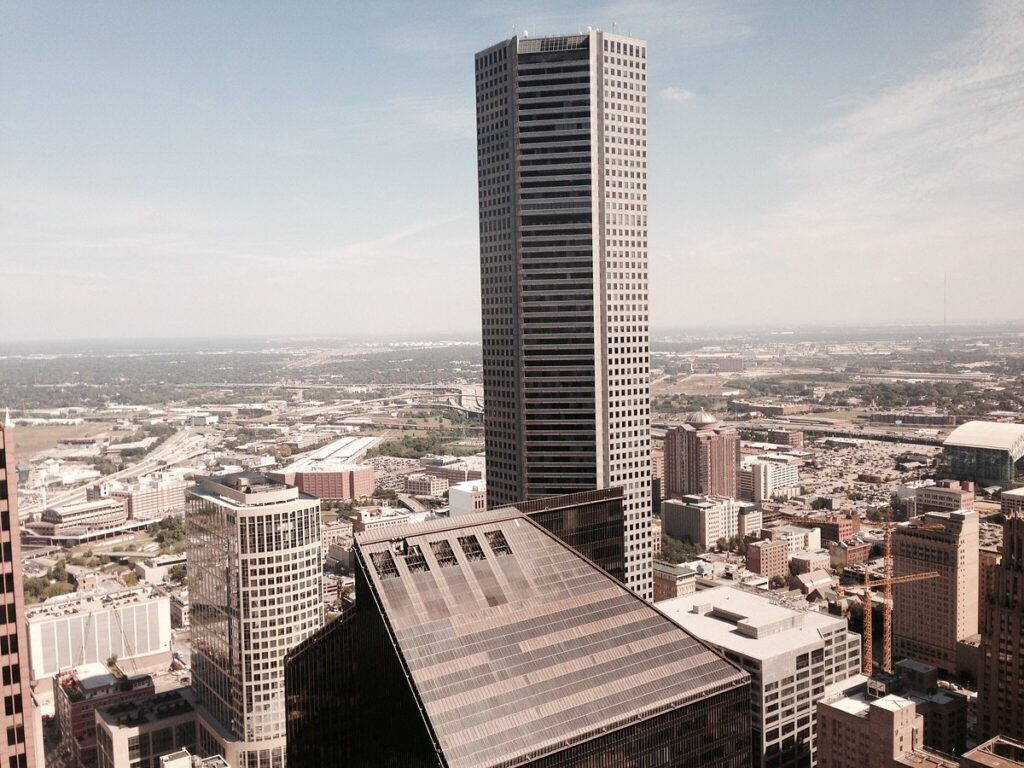
Houston’s skyline is one of the most recognizable in the United States – a gleaming symbol of innovation, ambition, and economic might. Among the impressive collection of skyscrapers that define the city’s horizon, one structure dominates them all: the JPMorgan Chase Tower. Soaring 1,002 feet (305 meters) above the streets of downtown, this architectural marvel is not only the tallest building in Houston, but also one of the tallest skyscrapers in the entire country.
Located at 600 Travis Street, the tower is an unmistakable landmark that reflects Houston’s evolution from a regional hub into a global energy and finance powerhouse. Its towering height, sleek glass façade, and geometric precision make it a centerpiece of the city’s identity – a modern cathedral to commerce that has stood tall for more than four decades.
For Houstonians, skyscrapers are more than just office buildings; they are monuments to progress. The city’s growth, particularly during the energy booms of the late 20th century, was mirrored in the upward climb of its architecture. The JPMorgan Chase Tower, once known as the Texas Commerce Tower, perfectly captures that era’s spirit – when oil wealth, architectural daring, and civic pride merged to reshape Houston’s skyline forever.
When completed in 1981, the tower was briefly the tallest building outside of New York and Chicago, a remarkable feat that underscored Houston’s status as a city of national prominence. Standing higher than the Williams Tower (901 feet) and Bank of America Center (780 feet), it remains unmatched in height to this day. Its commanding presence has become synonymous with downtown Houston, visible for miles in every direction and often used as a reference point for navigation and orientation.
But the building’s story is more than a tale of measurements and records. The Chase Tower represents a bold architectural vision brought to life by one of the 20th century’s most influential designers, I. M. Pei, whose minimalist style and use of geometric form redefined urban aesthetics. From its five-sided design – a rarity among skyscrapers – to its iconic glass curtain wall that reflects the Texas sun, the tower is both functional and poetic.
For decades, its observation deck offered breathtaking panoramic views of the city, attracting tourists and locals eager to see Houston from above. Though it’s now closed to the public, the building continues to capture the imagination of architects, photographers, and visitors alike. Whether bathed in sunlight or illuminated against the night sky, the Chase Tower remains a visual anchor – a testament to Houston’s ambition and its enduring place in the American architectural landscape.
The History Behind the JPMorgan Chase Tower
The story of the JPMorgan Chase Tower begins at the height of Houston’s economic ascent. Construction started in 1979, during one of the city’s oil booms, when energy companies were fueling rapid growth and downtown development was at its peak. Designed by I. M. Pei & Partners, the same architectural firm behind landmarks like the Louvre Pyramid in Paris and Dallas City Hall, the tower was envisioned as a statement of strength, stability, and progress.
When completed in 1981, it was originally named the Texas Commerce Tower – a nod to its primary tenant, the Texas Commerce Bank. The name later changed to reflect corporate mergers, becoming the JPMorgan Chase Tower after Chase Bank acquired the institution.
At the time of its completion, the tower was celebrated for both its scale and its style. Houston was rapidly transforming from a sprawling, industrial city into a modern metropolis, and the new skyscraper embodied that transition. Its opening marked a defining moment in the city’s skyline – one that would remain unchallenged for decades.
The 1980s were a period of great optimism, and the Chase Tower symbolized that spirit. Its height and elegant design represented not just architectural achievement, but also the boundless confidence of a city that saw itself as the energy capital of the world. Even during economic downturns, the building remained a powerful reminder of Houston’s resilience and ambition.
Architectural Design and Engineering Marvel
The JPMorgan Chase Tower stands out not only for its size but for its unique pentagonal design, making it one of the tallest five-sided buildings in the world. This unusual geometry was not just an aesthetic choice – it was a brilliant engineering solution that allowed for greater wind resistance and improved interior efficiency.
The tower’s exterior is clad in gray glass and polished aluminum, giving it a sleek, reflective appearance that changes tone depending on the time of day and weather. Its sharp lines and understated elegance are hallmarks of I. M. Pei’s modernist philosophy, which favored clean geometry over ornamentation.
Inside, the building houses one of the largest lobby spaces in Texas, spanning several stories and featuring marble, granite, and glass elements that create an atmosphere of openness and light. Its 75 floors include corporate offices, conference spaces, and high-speed elevators capable of moving at more than 1,000 feet per minute – a technological marvel at the time of construction.
Engineers also designed the tower to withstand Houston’s unpredictable weather. During Hurricane Alicia in 1983, many of the building’s glass panels shattered due to wind pressure and debris, but its steel and concrete core remained intact – a testament to its structural integrity. Afterward, it underwent extensive repairs and upgrades, reinforcing its reputation as both an architectural and engineering triumph.
Observation Deck – Houston from Above
For years, one of the Chase Tower’s biggest attractions was its observation deck on the 60th floor, offering one of the best panoramic views of Houston’s skyline. Visitors could gaze out across the vast cityscape – from the Williams Tower in the Galleria area to Minute Maid Park, Buffalo Bayou, and the Theater District below.
The experience was unforgettable. On a clear day, visitors could see nearly 20 miles in every direction, watching the city’s sprawling freeways, shimmering towers, and urban parks stretch out into the Texas horizon.
Unfortunately, after the events of September 11, 2001, the observation deck was permanently closed to the public for security reasons. Despite this, the tower remains one of the most photographed buildings in Texas. Its height and location in the heart of Downtown Houston make it a natural centerpiece for skyline photography and drone footage.
Today, travelers looking for a similar view can visit alternative observation spots such as the Williams Tower Sky Lobby, the POST Houston rooftop, or the Z on 23 Rooftop Lounge – all of which offer striking views of the city’s modern skyline. Still, for those who remember standing atop the Chase Tower’s deck, few experiences compare.
Interesting Facts About the Chase Tower
- The JPMorgan Chase Tower is the tallest five-sided building in the world.
- It stands 1,002 feet (305 meters) tall, making it 13 floors higher than the Williams Tower.
- During Hurricane Alicia (1983), hundreds of glass windows shattered, leading to one of the largest window replacement projects in Texas history.
- Its high-speed elevators travel more than 1,000 feet per minute.
- The building was originally called Texas Commerce Tower and renamed in 2000 after bank mergers.
- It has appeared in films, TV shows, and countless skyline photos symbolizing Houston’s downtown area.
- The tower’s base includes the Jones Plaza, a public space often used for cultural events.
- Its address, 600 Travis Street, is one of the most prestigious in the city’s business community.
How JPMorgan Chase Tower Compares to Other Texas Skyscrapers
When it comes to Texas skyscrapers, the JPMorgan Chase Tower remains the undisputed leader in height and scale. The Williams Tower in Houston’s Uptown district comes in second at 901 feet, followed by Bank of America Tower (780 ft) and Comerica Bank Tower in Dallas (787 ft).
| Building | City | Height (ft) | Floors | Year Completed |
|---|---|---|---|---|
| JPMorgan Chase Tower | Houston | 1,002 | 75 | 1981 |
| Williams Tower | Houston | 901 | 64 | 1983 |
| Comerica Bank Tower | Dallas | 787 | 60 | 1987 |
| Bank of America Tower | Houston | 780 | 56 | 2019 |
Houston dominates the list, with multiple skyscrapers over 700 feet tall. This architectural density underscores the city’s status as Texas’s skyscraper capital — a visual reflection of its thriving economy, energy industry, and global reach.
Visiting the Tallest Building in Houston
Although the observation deck is closed, the JPMorgan Chase Tower remains a must-see landmark for anyone exploring Downtown Houston.
📍 Location: 600 Travis Street, Houston, TX 77002
🚗 Getting there: The tower is accessible via Houston’s METRORail and numerous parking garages in the downtown district.
☕ Nearby attractions: Discovery Green Park, Theater District, Sam Houston Park, and the Houston City Hall complex are all within walking distance.
The area surrounding the tower is rich with dining and cultural options. Visitors can enjoy coffee at Common Bond Brasserie, dinner at The Grove, or cocktails with skyline views at Z on 23 Rooftop Bar. Walking tours often include the Chase Tower as part of the Downtown architecture route, highlighting its influence on modern Houston design.
Even from the street level, the tower’s massive vertical rise creates a stunning photo opportunity. Its reflective surface mirrors the Texas sky, making it one of the most photogenic spots in the city.
Final Thoughts – The Symbol of Ambition and Growth
The JPMorgan Chase Tower is more than the tallest building in Houston – it’s a statement of what the city stands for. It represents ambition, resilience, and progress. Rising over downtown for more than forty years, it has witnessed the city’s growth, its energy booms and busts, and its ongoing transformation into a global hub of innovation.
Although its observation deck is now closed, the tower continues to inspire awe and admiration. It remains one of the most recognizable architectural icons in Texas, a symbol of the drive and determination that built Houston into what it is today.
If you want to understand Houston’s ambition – look up at the JPMorgan Chase Tower.
Frequently Asked Questions
What is the tallest building in Houston?
The tallest building in Houston is the JPMorgan Chase Tower, standing 1,002 feet (305 meters) tall with 75 stories.
When was the JPMorgan Chase Tower built?
The tower was completed in 1981 and originally named the Texas Commerce Tower before becoming the JPMorgan Chase Tower.
Is the Chase Tower observation deck open to the public?
No, the observation deck has been closed since 2001, but visitors can still admire the tower from the surrounding Downtown area.
Where is the JPMorgan Chase Tower located?
It’s located at 600 Travis Street, in the heart of Downtown Houston, near several cultural and business landmarks.